April 27, 2026
Advance Parole Explained: What Immigrants Should Know Before Travel Outside the U.S.
For many immigrants living in the United States, the dream of visiting family back home or exploring the world often feels out of reach. If you are in the middle of a legal process, such as a pending green card application, you might worry that a trip abroad could ruin your chance at a future in America. This is where Advance Parole becomes your most vital tool.
Finding your way around the complicated world of the U.S. It's never easy to deal with Citizenship and Immigration Services (USCIS). If you make a small mistake, like leaving the country without the right paperwork, your case could be "abandoned." We at TripVien Law see how these rules stress out families in Lakeland and all over Florida. Knowing how to fill out Form I-131 correctly can make the difference between a smooth return and being banned from the U.S. for many years.
1) What Is Advance Parole?
Advance Parole is a specific type of travel authorization. It allows certain non-citizens to return to the United States after a temporary trip abroad without needing to apply for a new visa. Think of it as a "permission slip" from the government that protects your current legal process while you are away.
Technically, this document "paroles" you back into the country. This means that when you reach the border, a CBP officer allows you to enter even if you do not have a valid immigrant or non-immigrant visa. It is primarily used by people who have filed for an Adjustment of Status (AOS) but are still waiting for a final decision on their green card.
Without this document, the government assumes you have no intention of finishing your application. If you leave without an approved permit, your case is usually denied immediately.
2) Who Should Request This Travel Document?
Not every immigrant needs Advance Parole, but for certain groups, it is a non-negotiable requirement. If you fall into any of the following categories, you must secure this permit before you even book a flight:
Adjustment of Status Applicants: If you filed Form I-485 to become a permanent resident, you need this to keep your application alive.
DACA Recipients: Those with Deferred Action for Childhood Arrivals can travel for specific reasons like work, school, or emergencies.
TPS Beneficiaries: People with Temporary Protected Status often use this to visit their home countries for humanitarian reasons.
Asylum Seekers: If you have a pending asylum case, you may need this document, though you should never travel to the country from which you are seeking protection.
If you are already a citizen, you don't need to worry about these permits. However, if you are helping a family member through the process, you might want to learn how to apply for U.S. Citizenship through Naturalization to understand the long-term goals of the immigration journey.
3) Why Is Form I-131 Critical for Your Status?
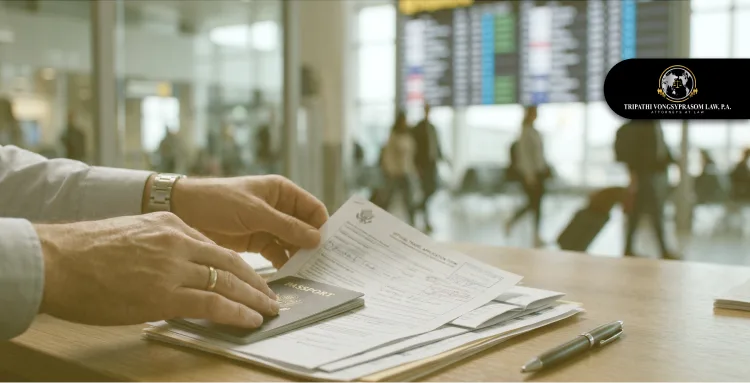
The actual application for this travel benefit is Form I-131, Application for Travel Document. Why is this form so critical? Because it prevents the "automatic abandonment" rule. Under U.S. immigration law, if you have a pending green card case and you leave the U.S. without this permit, the government treats your application as if you threw it in the trash. You would have to start the entire process over, pay all the fees again, and potentially wait years for a new priority date.
Furthermore, for people who have spent time in the U.S. without legal status, leaving the country can trigger "unlawful presence" bars. These bars can prevent you from returning for 3 or 10 years. An approved Advance Parole document can sometimes help mitigate these risks, but you should always speak with a Lakeland immigration lawyer before testing these waters.
4) Can You Travel Without This Approved Document?
The short answer is almost never. Unless you hold a very specific type of visa, such as an H-1B or L-1, leaving the U.S. without your physical Advance Parole card (or the combo EAD card) is a massive risk. Even if your application was "approved" online, you must have the physical document in your hand before you cross the border.
If you are a driver in Florida, you know that following the rules of the road keeps you safe. Just as you need to know how traffic tickets affect your driving record to keep your license, you must follow USCIS rules to keep your immigration status. Traveling without the permit is like driving without a license; you might get away with it for a minute, but the consequences of getting caught are life-altering.
5) What Are the Risks at the Port of Entry?
One of the biggest misconceptions about Advance Parole is that it "guarantees" you can come back. Unfortunately, that is not true. According to official USCIS guidance, an approved travel document only allows you to seek entry at a port of entry.
When you land at the airport, you will meet a CBP officer. They have the "discretionary authority" to decide if you should be allowed back in. They will look at:
Your criminal record (even minor offenses).
Any previous immigration violations or fraud.
The validity of your underlying application (DACA, TPS, or Green Card).
Whether you stayed outside the U.S. longer than the permit allowed.
Most people with a clean record and a valid document have no issues. However, if you have ever had a run-in with the law, even a DUI arrest in Florida, you must be extremely careful. Criminal charges can make you "inadmissible," meaning the officer could turn you away at the border despite your travel permit.
6) How Long Does the Application Process Take?

Patience is a requirement when dealing with immigration travel authorization. Currently, the processing times for Form I-131 can range from several months to nearly a year. This delay is why we often recommend that our clients file for travel permission at the same time they file their green card application.
Because the wait is so long, many people find themselves in a bind when a family emergency happens. If you cannot wait six months for a standard permit, you may need to look into Emergency Advance Parole. This is a faster track, but it requires heavy proof of a "compelling" reason to travel.
7) What Evidence Do You Need for Emergency Advance Parole?
Life doesn't always wait for USCIS processing times. If a close relative is gravely ill or a funeral is taking place, you can request an expedited appointment at a local field office. To be successful, you generally need to provide 3-4 key pieces of evidence:
Medical Records: A signed letter from a doctor or hospital records showing the urgency of a relative's condition.
Death Certificates: If you are traveling for a funeral, a copy of the official certificate (with a certified translation if it is not in English).
Proof of Relationship: Birth certificates or marriage licenses that prove you are actually related to the person in need.
Affidavits: Personal statements explaining why your presence is required immediately.
Getting an emergency permit is not a simple walk-in process. It requires a specific appointment and a lot of preparation. Many families in Lakeland find this process overwhelming, much like the stress of figuring out what to do after a car accident in Florida. In both cases, having professional guidance ensures you don't miss a detail that could cost you everything.
8) Which Immigrants Are Eligible for Travel Authorization?
Eligibility depends on your specific status. The government categorizes travel documents into different buckets. While the Advance Parole document is the most common, there are others like the Re-entry Permit (for Green Card holders staying out for over a year) and the Refugee Travel Document.
Common eligibility groups include:
I-485 Applicants: Those currently "adjusting status" to become permanent residents.
DACA Recipients: Must prove travel is for educational, employment, or humanitarian purposes.
Asylees and Refugees: Must use a Refugee Travel Document rather than a standard passport from their home country.
Parolees: Individuals who were previously paroled into the U.S. and need to leave and return.
If you are unsure which category you fit into, you should consult an expert. Misfiling the wrong version of the form can lead to a flat denial and a loss of your filing fees.
9) Will Travel Affect Your Pending Green Card Application?

As long as you have your approved USCIS travel document, a short trip abroad usually will not hurt your green card case. However, "short" is the keyword. If you stay outside the United States for a long time—typically more than 180 days—the government might start to question whether you actually live in the U.S.
Furthermore, you must ensure you do not miss any important appointments while you are away. If USCIS schedules you for a "biometrics" (fingerprinting) appointment or a green card interview while you are in another country, and you do not show up, they will deny your case for "abandonment."
It is a good idea to have a trusted person checking your mail daily. If you receive a notice from the government, you may need to fly back immediately to attend your interview. Just like keeping an eye on an elderly relative and knowing the signs of nursing home neglect, being proactive about your immigration mail is a form of protection.
10) How to Apply for the Permit Safely?
The application process involves more than just filling out a form. To ensure your Advance Parole is approved without a "Request for Evidence" (RFE), you should follow a strict checklist:
Identity Proof: Include a clear copy of your current passport and your EAD card if you have one.
Passport Photos: Two identical, color, passport-style photos taken within the last 30 days.
Fee Payment: Ensure you include the correct filing fee (unless you filed it with an I-485, in which case the fee might be waived depending on the filing date).
Explanation of Need: For DACA and TPS, you need a detailed statement and evidence of why you are traveling.
Once you mail the package to the correct USCIS lockbox, you will receive a receipt notice. This notice is not a travel document. You must wait for the actual card or paper permit to arrive.
How Does a Lakeland Immigration Lawyer Help You?
The rules around Advance Parole change frequently. Policy updates at the federal level can suddenly make travel riskier for certain groups, especially those with past immigration issues. This is why having a local advocate in Lakeland, FL, is so important.
Through TripVien Law, led by Attorney Hardam Tripathi (known to many as "Mr. Trip"), we specialize in complex immigration cases. We don't just fill out forms; we build a strategy for your life in the U.S. Whether you are dealing with a pending green card or you need to help a family member with humanitarian parole, we provide the native-level expertise you need to succeed.
We understand that our clients aren't just case numbers. They are neighbors in Central Florida who want to work, travel, and live without fear. Our firm handles everything from Adjustment of Status filings to deportation defense and even personal injury matters. We are a full-service firm dedicated to protecting your rights in every area of your life.
Summary of What You Need to Know:
Always obtain the physical document before departing.
Form I-131 is the required application for this permit.
CBP has the final say on your re-entry at the airport.
DACA and TPS recipients have stricter travel requirements.
Consult with a lawyer if you have any past criminal history or immigration violations.
Ready to take the next step in your immigration journey? Contact TripVien Law today to ensure your travel plans don't jeopardize your American dream. We are here to guide you through every step of the USCIS process with clarity and care.
